Summary

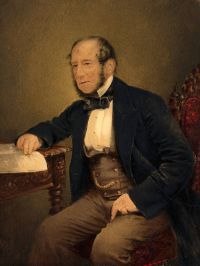
Portrait of Henry Adams Henry Adams History of the United States of America… (1889)

Not so much the glories as the disgraces of the war roused public sympathy; not so much the love of victory as the ignominy of defeat, and the grinding necessity of supporting government at any cost of private judgment. At such a moment any success was keenly felt, and covered every failure. The slow conviction that come what would the nation must be preserved, brought one man after another into support of the war, until the Federalists found their feet in a quicksand.
Source: Gutenberg

Portrait of Henry Adams Henry Adams History of the United States of America… (1889)

Detroit is not tenable. Were I to take it without having it in my power to occupy the opposite shore, I should be under the necessity of hiding the army in the adjacent swamp to preserve it from the effects of the shot and shells which the enemy would throw with impunity from the opposite shore. This result is so obvious to every man who has the least military information, that it appears to me as extraordinary as any other part of General Hull’s conduct that he should choose to defend Detroit rather than attack Malden.
Source: Gutenberg

Portrait of Henry Adams Henry Adams History of the United States of America… (1889)

Yet neither equality in physical courage nor superiority in the higher branches of gunnery and small-arms was the chief success of Americans in the war. Beyond question the schooner was the most conclusive triumph. Readers of Michael Scott could not forget the best of his sketches,—the escape of the little American schooner “Wave” from two British cruisers, by running to windward under the broadside of a man-of-war. With keen appreciation Scott detailed every motion of the vessels, and dwelt with peculiar emphasis on the apparent desperation of the attempt.
Source: Gutenberg

Get perspective with Kwize: daily news enlightened by great literature