Summary

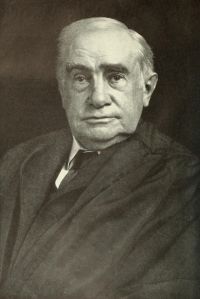
Portrait of Henry Billings Brown Henry Billings Brown Dooley v. United States (183 U.S. 151…

At the same time it is possible that it may also be a duty upon an export. The mere fact that the duty is not laid at the port of departure is by no means decisive against its being such. It is too clear for argument that, if vessels bound for a foreign country were compelled to stop at an intermediate port and pay into the Treasury of the United States a duty upon their cargoes, such duty would be a tax upon an export, and the place of its exaction would be of little significance.
Source: Wikisource

Portrait of Henry Billings Brown Henry Billings Brown Dooley v. United States (183 U.S. 151…

Now, while an import into one port almost necessarily involves a prior export from another, still, in determining the character of the tax imposed, it is important to consider whether the duty be laid for the purpose of adding to the revenues of the country from which the export takes place, or for the benefit of the territory into which they are imported.
Source: Wikisource

Portrait of Henry Billings Brown Henry Billings Brown Dooley v. United States (183 U.S. 151…

Certainly the argument connot be that because a power has been conferred on Congress by the Constitution to levy a tax on foreign commerce, therefore the Constitution has taken away from Congress power to tax even indirectly domestic commerce. Because the grant of power as to imposts contained in the 1st clause of § 8 of article 1 of the Constitution relates to foreign commerce, there arises no limitation on the general authority to tax as to all other subjects, which flows from the other provisions of the same clause.
Source: Wikisource

Get perspective with Kwize: daily news enlightened by great literature