Summary

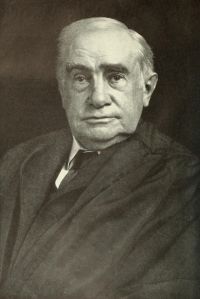
Portrait of Henry Billings Brown Henry Billings Brown Gill v. United States — Opinion of the Court

Clearly, a patentee has no right, either in law or morals, to persuade or encourage officers of the government to adopt his inventions, and look on while they are being made use of year after year without objection or claim for compensation, and then to set up a large demand, upon the ground that the government had impliedly promised to pay for their use.
Source: Wikisource

Portrait of Henry Billings Brown Henry Billings Brown Gill v. United States — Opinion of the Court

Now, whether the property of the government and the services of its employees be used in the experiments necessary to develop the invention, or in the preparation of patterns and working drawings, and the construction of the completed machines, is of no importance. We do not care, in this connection, to dwell upon the niceties of the several definitions of the word 'develop' as applied to an invention. The material fact is that in both this and the Solomons Case the patentee made use of the labor and property of the government in putting his invention into the form of an operative machine
Source: Wikisource

Get perspective with Kwize: daily news enlightened by great literature