Summary

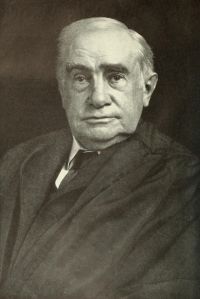
Portrait of Henry Billings Brown Henry Billings Brown Potts Company v. Creager — Opinion of the Court

Doubtless, a patentee is entitled to every use of which his invention is susceptible, whether such use be known or unknown to him; but the person who has taken his device, and, by improvements thereon, has adapted it to a different industry, may also draw to himself the quality of inventor. If, for instance, a person were to take a coffee mill and patent it as a mill for grinding spices, the double use would be too manifest for serious argument.
Source: Wikisource

Portrait of Henry Billings Brown Henry Billings Brown Potts Company v. Creager — Opinion of the Court

Putting aside, for the purposes of this discussion, the fact that the Creager cylinder was an abandoned experiment, did this involve invention? Certainly, if this exhibit does not anticipate, none of the others do. The answer to this requires the consideration of the often-recurring question, which has taxed the ingenuity of courts ever since the passage of the patent acts, as to what invention really is. When a patented device is a mere improvement upon an existing machine, and the case is not complicated by other anticipating devices, the solution is ordinarily free from difficulty.
Source: Wikisource

Portrait of Henry Billings Brown Henry Billings Brown Potts Company v. Creager — Opinion of the Court

The apparent simplicity of a new device often leads an inexperienced person to think that it would have occurred to any one familiar with the subject; but the decisive answer is that, with dozens and perhaps hundreds of others laboring in the same field, it had never occurred to any one before. The practiced eye of an ordinary mechanic may be safely trusted to see what ought to be apparent to every one.
Source: Wikisource

Get perspective with Kwize: daily news enlightened by great literature