Summary

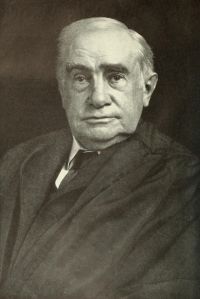
Portrait of Henry Billings Brown Henry Billings Brown Du Bois v. Kirk — Opinion of the Court

It was in fact the application of an old device to meet a novel exigency, and to subserve a new purpose. That it is a useful improvement can scarcely be doubted. Indeed, in view of the fact that John Du Bois made application for a similar patent himself, and that he and the defendant, since his death, have constantly made use of a device which differs from that of Kirk's only in the fact that he relieves the pressure by lowering the end of the forebay to a level beneath the apex of the dam, it does not lie in defendant's mouth to deny its utility.
Source: Wikisource

Portrait of Henry Billings Brown Henry Billings Brown Du Bois v. Kirk — Opinion of the Court

Waste ways were a common and wellknown method of relieving the pressure of water, but had, before the Kirk invention, been generally, if not universally, used to draw off the water from the pond above the dam, when it reached a certain height, and thereby the pressure upon the dam was relieved. Indeed, the dam itself becomes a waste way as soon as the water in the pond reaches a higher level than the apex of the dam, and flows over it.
Source: Wikisource

Portrait of Henry Billings Brown Henry Billings Brown Du Bois v. Kirk — Opinion of the Court

Parallel with the stream, at one or both sides of the dam, is a sluice, termed a 'forbay,' at each end of which is a gate or wicket, for the admission of water at its upper end from the pond, and its discharge at its lower end into the tail race. When it is desired to raise the dam, and create a reservoir of water, the wicket at the upper end of the forebay is opened, and that at the lower end is closed.
Source: Wikisource

Get perspective with Kwize: daily news enlightened by great literature