Summary

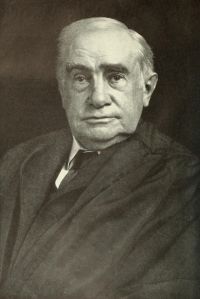
Portrait of Henry Billings Brown Henry Billings Brown Turpin v. Lemon — Opinion of the Court

Assuming the common-law rule to be, as stated by the elementary writers upon taxation, that the purchaser at a tax sale is bound to take upon himself the burden of showing the regularity of all proceedings prior thereto, it is entirely clear that statutes declaring the tax deed to be prima facie evidence, not only of regularity in the sale, but of all prior proceedings and of title in the purchaser, are valid, since the only effect of such statutes is to change the burden of proof, which rested at common law upon the purchaser, and cast it upon the party who contests the sale.
Source: Wikisource

Portrait of Henry Billings Brown Henry Billings Brown Turpin v. Lemon — Opinion of the Court

A year is then allowed for redemption, after the expiration of which a deed of the land is executed to the purchaser at the sheriff's sale by the clerk of the county court, which deed, the statute provides, shall not be invalidated by reason of any irregularity in the proceedings under which the land was sold, unless such irregularities appear upon the face of such proceedings of record in the office of the clerk, and be such as to materially prejudice and mislead the owner.
Source: Wikisource

Portrait of Henry Billings Brown Henry Billings Brown Turpin v. Lemon — Opinion of the Court

That it is competent for the legislature to provide by curative statutes that irregularities in the sales of lands shall not prejudice the purchaser after a certain time has elapsed and a deed has been given is entirely clear, although, as observed by Judge Cooley in his work upon Taxation, chap. 10, p. 227, such defective proceedings cannot be cured where there is a lack of jurisdiction to take them.
Source: Wikisource

Get perspective with Kwize: daily news enlightened by great literature