Summary

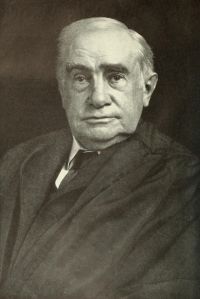
Portrait of Henry Billings Brown Henry Billings Brown Tyler v. Judges of the Court of Registration…

The prime object of all litigation is to establish a right asserted by the plaintiff or to sustain a defense set up by the party pursued. Save in a few instances where, by statute or the settled practice of the courts, the plaintiff is permitted to sue for the benefit of another, he is bound to show an interest in the suit personal to himself, and even in a proceeding which he prosecutes for the benefit of the public, as, for example, in cases of nuisance, he must generally aver an injury peculiar to himself, as distinguished from the great body of his fellow citizens.
Source: Wikisource

Portrait of Henry Billings Brown Henry Billings Brown Tyler v. Judges of the Court of Registration…

A plaintiff cannot properly sue for wrongs that do not affect him, and, on the other hand, a person is not properly made a defendant to a suit upon a cause of action in which he has no interest, and as to which no relief is sought against him.' In familiar illustration of this rule, the plaintiff in an action of ejectment must recover upon the strength of his own title, and not upon the weakness of the defendant's who may even show title in a third person to defeat the action.
Actions instituted in this court by writ of error to a state court are no exceptions to this rule.
Source: Wikisource

Get perspective with Kwize: daily news enlightened by great literature