Summary

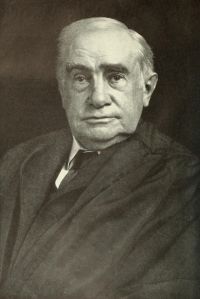
Portrait of Henry Billings Brown Henry Billings Brown Wabash Company v. City of Defiance…

Indeed, the general principle that the legislative power of a city may control and improve its streets, and that such power, when duly exercised by ordinances, will override any license previously given by which the control of a certain street has been surrendered to any individual or corporation, is so well established, both by the cases in this court and in the courts of the several states, that a reference to the leading authorities upon the subject is sufficient.
Source: Wikisource

Portrait of Henry Billings Brown Henry Billings Brown Wabash Company v. City of Defiance…

If it were possible that a city could make such a contract at all, it could only be done by express authority of the legislature, and in language that would admit of no other interpretation. It is claimed that the construction of the sidewalks by the railroad company was a consideration, since it had been the duty of the city, up to that time, to keep them in repair, but it surely could not be a consideration for the perpetual maintenance of the bridges.
Source: Wikisource

Portrait of Henry Billings Brown Henry Billings Brown Wabash Company v. City of Defiance…

The only contract as to time which could possibly be extracted from this ordinance would be that the railway company, on building the bridges and approaches, should be entitled to maintain them in perpetuity. The result would be that if the city should, in the growth of its population, become thickly settled in the neighborhood of these bridges, they would stand forever in the way of any improvement of the streets.
Source: Wikisource

Get perspective with Kwize: daily news enlightened by great literature