Summary

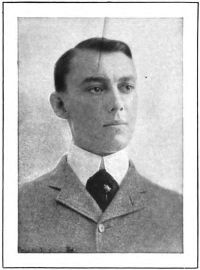
Portrait of Henry C. Rowland Henry C. Rowland,  In the Shadow — [Part III]. Chapter 20 (1906)

“ While in threading up some little winding stream, oozing sluggishly from forest and primeval swamp, one will come upon the footprints of a long-forgotten occupation. Sometimes it is still possible to trace the washed-out rooty banks of ancient rice dikes and to separate from the venerable woods of pine and live oak the squarely defined blocks of second growth springing from a tangled morass once cleared and fruitful. ”
Source: Wikisource

Portrait of Henry C. Rowland Henry C. Rowland,  In the Shadow — [Part III]. Chapter 20 (1906)

“ Under the old régime the rice planters of South Carolina were surpassed by none in the new world in the magnificent style in which they lived. Even in the present era of extravagance it is doubtful if there is any one class that is able to enjoy the same independent ease and elegance as did these people. The peculiar conditions then extant, by which a household might live surrounded by all of the luxury which the arts of the epoch produced and enjoy the regal setting of a monarch, without his care and obligation, have passed away forever. ”
Source: Wikisource

Portrait of Henry C. Rowland Henry C. Rowland,  In the Shadow — [Part III]. Chapter 20 (1906)

“ Live Oak Plantation, the home of Manning Moultrie, was one of the few rice plantations the organization and operation of which had not been thrown out of balance by the shock of the Civil War. The family fortunes were too securely rooted to be shaken by even such a cataclysm. Manning's father had simply laid down his sword to resume his operation of the broad acres, fertile as ever, but worked by paid in the place of slave labor. ”
Source: Wikisource

Get perspective with Kwize: daily news enlightened by great literature