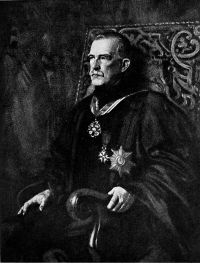
Henry Marion Howe

Henry Marion Howe

Summary

Portrait of Henry Marion Howe Henry Marion Howe 1911 Encyclopædia Britannica (1911)

Now in the series of operations, the blast-furnace, puddling and crucible processes, through which the iron passes from the state of ore to that of crucible tool steel, it is so difficult to detect just which are the conditions essential to excellence in the final product that, once a given procedure has been found to yield excellent steel, every one of its details is adhered to by the more cautious ironmasters, often with surprising conservatism.
Source: Wikisource

Portrait of Henry Marion Howe Henry Marion Howe 1911 Encyclopædia Britannica (1911)

If, ignoring temporarily and for simplicity the fact that part of the carbon may exist in the state of graphite, we consider the behaviour of iron in cooling from the molten state, AB and BC give the temperature at which, for any given percentage of carbon, solidification begins, and Aa, aB, and Bc that at which it ends. But after solidification is complete and the metal has cooled to a much lower range of temperature, usually between 900° and 690° C., it undergoes a very remarkable series of transformations.
Source: Wikisource

Portrait of Henry Marion Howe Henry Marion Howe 1911 Encyclopædia Britannica (1911)

The old varieties of wrought iron, steel and cast iron preserve their old names; the new class is called steel by main force. As a result, certain varieties, such as blister steel, are called “steel” solely because they have the hardening power, and others, such as low-carbon steel, solely because they are free from slag. But the former lack the essential quality, slaglessness, which makes the latter steel, and the latter lack the essential quality, the hardening power, which makes the former steel. “Steel” has come gradually to stand rather for excellence than for any specific quality.
Source: Wikisource

Get perspective with Kwize: daily news enlightened by great literature