Summary

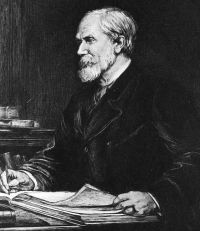
Portrait of Henry Yule Henry Yule 1911 Encyclopædia Britannica (1911)

Ricci, seeing their dissatisfaction, set about constructing a map of the hemisphere on a great scale, so adjusted that China, with its subject states, filled the central area, and, without deviating from truth of projection, occupied a large space in proportion to the other kingdoms gathered round it. All the names were then entered in Chinese calligraphy. This map obtained immense favour, and was immediately engraved at the expense of the Viceroy and widely circulated.
Source: Wikisource

Portrait of Henry Yule Henry Yule 1911 Encyclopædia Britannica (1911)

Probably no European name of past centuries is so well known in China as that of Li-ma-teu, the form in which the name of Ricci (Ri-cci Mat-teo) was adapted to Chinese usage, and by which he appears in Chinese records. [4] The works which he composed in Chinese are numerous; a list of them (apparently by no means complete, however) will be found in Kircher’s China Illustrata, and also in Abel Rémusat’s Nouveaux Mélanges Asiatiques (ii. 213–15) . They are said to display an aptitude for clothing ideas in a Chinese dress very rare and remarkable in a foreigner.
Source: Wikisource

Portrait of Henry Yule Henry Yule 1911 Encyclopædia Britannica (1911)

Their proceedings were very cautious and tentative; they excited the curiosity and interest of even the more intelligent Chinese by their clocks, their globes and maps, their books of European engravings, and by Ricci’s knowledge of mathematics, including dialling and the projection of maps. They conciliated some influential friends, and their reputation spread widely in China.
Source: Wikisource

Get perspective with Kwize: daily news enlightened by great literature