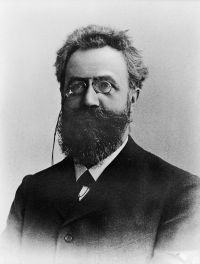
 Hermann Ebbinghaus,
Memory: A Contribution to Experimental Psychology…
(1913)
Hermann Ebbinghaus,
Memory: A Contribution to Experimental Psychology…
(1913)
“ For ascertaining the relation of dependence between the increase in the number of repetitions of a series and the ever deeper impression of it which result, I have formulated the problem as follows: If homogeneous series are impressed to different extents as a result of different numbers of repetitions, and then 24 hours later are learned to the point of the first possible reproduction by heart, how are the resulting savings in work related to each other and to the corresponding number of former repetitions? ”
