Summary

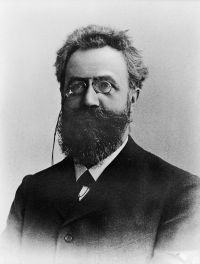
Portrait of Hermann Ebbinghaus Hermann Ebbinghaus Memory: A Contribution to Experimental Psychology… (1913)

The question can he asked: What number of syllables can be correctly recited after only one reading? For me the number is usually seven. Indeed I have often succeeded in reproducing eight syllables, but this has happened only at the beginning of the tests and in a decided minority of the cases. In the case of six syllables on the other hand a mistake almost never occurs; with them, therefore, a single attentive reading involves an unnecessarily large expenditure of energy for an immediately following reproduction.
Source: Wikisource

Portrait of Hermann Ebbinghaus Hermann Ebbinghaus Memory: A Contribution to Experimental Psychology… (1913)

RAPIDITY OF LEARNING SERIES OF SYLLABLES AS A FUNCTION OF THEIR LENGTH
Section 19. Tests Belonging to the Later Period
It is sufficiently well known that the memorisation of a series of ideas that is to be reproduced at a later time is more difficult, the longer the series is. That is, the memorisation not only requires more time taken by itself, because each repetition lasts longer, but it also requires more time relatively because an increased number of repetitions becomes necessary.
Source: Wikisource

Portrait of Hermann Ebbinghaus Hermann Ebbinghaus Memory: A Contribution to Experimental Psychology… (1913)

The longer of the two adjoining curves of Fig. 6 illustrates the regular course of these numbers with approximate accuracy for such a small number of tests. As Fig. 6 shows, in the cases examined, the number of repetitions necessary for the memorisation of series in which the number of syllables progressively increased, itself increases with extraordinary rapidity with the increase in number of the syllables.
Source: Wikisource

Get perspective with Kwize: daily news enlightened by great literature