Summary

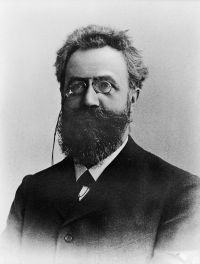
Portrait of Hermann Ebbinghaus Hermann Ebbinghaus Memory: A Contribution to Experimental Psychology… (1913)

The series are gradually forgotten, but—as is sufficiently well known—the series which have been learned twice fade away much more slowly than those which have been learned but once. If the re-learning is performed a second, a third or a greater number of times, the series are more deeply engraved and fade out less easily and finally, as one would anticipate, they become possessions of the soul as constantly available as other image-series which may be meaningful and useful.
Source: Wikisource

Portrait of Hermann Ebbinghaus Hermann Ebbinghaus Memory: A Contribution to Experimental Psychology… (1913)

For the relearning of a 12-syllable series at a definite time, accordingly, 38 repetitions, distributed in a certain way over the three preceding days, had just as favorable an effect as 68 repetitions made on the day just previous. Even if one makes very great concessions to the uncertainty of numbers based on so few researches, the difference is large enough to be significant. It makes the assumption probable that with any considerable number of repetitions a suitable distribution of them over a space of time is decidedly more advantageous than the massing of them at a single time.
Source: Wikisource

Get perspective with Kwize: daily news enlightened by great literature