Summary

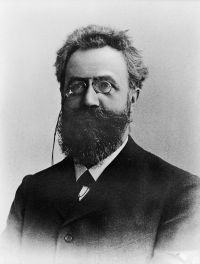
Portrait of Hermann Ebbinghaus Hermann Ebbinghaus Memory: A Contribution to Experimental Psychology… (1913)

It is true that he proceeds: “néanmoins...il y a quelque vérité dans l’opinion qui veut que la mémoire non seulement se fatigue mais s’oblitère” (nevertheless...there is some truth in the opinion that memory not only becomes fatigued but that it disappears”) , but he explains this by the theory that one memory might hinder another from appearing. “Si un souvenir ne chasse pas l’autre, on peut du moins prétendre qu’un souvenir empeche l’autre et qu’ainsi pour la substance cérébrale, chez l’individu, il y a un maximum de saturation.”
Source: Wikisource

Portrait of Hermann Ebbinghaus Hermann Ebbinghaus Memory: A Contribution to Experimental Psychology… (1913)

Who could, with even tolerable exactness, describe in its gradual course the supposed overlaying or sinking or crumbling of ideas? Who can say anything satisfactory about the inhibitions caused by series of ideas of different extent, or about the disintegration that a firm complex of any kind suffers by the use of its components in new connections? Everybody has his private “explanation” of these processes, but the actual conditions which are to be explained are, after all, equally unknown to all of us.
Source: Wikisource

Portrait of Hermann Ebbinghaus Hermann Ebbinghaus Memory: A Contribution to Experimental Psychology… (1913)

A third view holds that, at least in the case of complex ideas, obliviscence consists in the crumbling into parts and the loss of separate components instead of in general obscuration. The idea of resolution into component parts recently spoken of supplies here the only explanation. “The image of a complex object is dim in our memory not because as a whole with all its parts present and in order it is illuminated by a feebler light of consciousness, but it is because it has become incomplete.
Source: Wikisource

Get perspective with Kwize: daily news enlightened by great literature