Summary

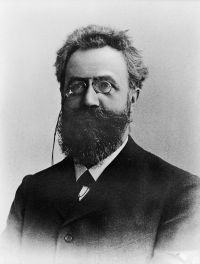
Portrait of Hermann Ebbinghaus Hermann Ebbinghaus Memory: A Contribution to Experimental Psychology… (1913)

Of course, if the series were left entirely to themselves and if they were always produced in precisely the same order, for each term there would appear only one association, the relatively strongest—namely, that with the immediately succeeding term. But series of ideas are never left to themselves. The rich and quickly changing order of events brings them into the most manifold relations.
Source: Wikisource

Portrait of Hermann Ebbinghaus Hermann Ebbinghaus Memory: A Contribution to Experimental Psychology… (1913)

It is customary to appeal for the explanation of this form of association to the nature of the soul. Mental events, it is said, are not passive happenings but the acts of a subject. What is more natural than that this unitary being should bind together in a definite way the contents of his acts, themselves also unified? Whatever is experienced simultaneously or in immediate succession is conceived in one act of consciousness and by that very means its elements are united and the unison is naturally stronger in proportion to the number of times they are entwined by this bond of conscious unity.
Source: Wikisource

Portrait of Hermann Ebbinghaus Hermann Ebbinghaus Memory: A Contribution to Experimental Psychology… (1913)

If the abstract but familiar conceptions of ‘power,’ ‘disposition,’ be substituted for the concrete ideas of saving in work and easier reproduction, the matter can be stated as follows. As a result of the learning of a series each member lass a tendency, a latent disposition, to draw after itself, at its own return to consciousness, all the members of the series which followed it. These tendencies are of varying strength. They are the strongest for the members which immediately follow. These tendencies are accordingly in general most easily demonstrable in consciousness.
Source: Wikisource

Get perspective with Kwize: daily news enlightened by great literature