Honoré de Balzac

Honoré de Balzac

Summary

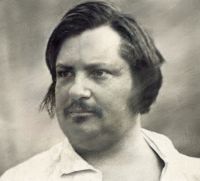
Portrait of Honoré de Balzac Honoré de Balzac Ursule Mirouët — Part I, Section 7 (1842)

Monsieur Savinien left again that evening, I have not seen him since, the Rue des Bourgeois has seemed empty to me, and he has, as it were, carried away my heart with him, without knowing it.”
“Is that all?” said the doctor.
“All, godfather,” she said, with a sigh in which the regret at not having more to tell was stifled under the sorrow of the moment.
“My dear little one,” said the doctor, seating Ursule on his knees, “you will soon be sixteen, and your life as a woman will begin.
Source: Wikisource

Portrait of Honoré de Balzac Honoré de Balzac Ursule Mirouët — Part I, Section 7 (1842)

The destinies of men are different from those of women. I was able to choose Ursule Mirouët for my wife and go to her telling her how much I loved her; whilst a young girl belies her virtues by soliciting the love of the man she loves: the woman has not, like us, the means of pursuing in broad daylight the accomplishment of her desires.
Source: Wikisource

Portrait of Honoré de Balzac Honoré de Balzac Ursule Mirouët — Part I, Section 7 (1842)

The notary, conducted by Ursule, came to the bottom of the garden. After the greetings and several trifling sentences, Dionis was granted a moment’s private hearing. Ursule and Bongrand retired to the salon.
“We will think it over! I will see!” said Bongrand to himself, repeating the doctor’s last words, “that is what clever people always say; death overtakes them and they leave the beings who are dear to them, in distress.”
The mistrust that highly gifted men inspire in business men is extraordinary; they will not trust them in the least while recognizing them in the greatest affairs.
Source: Wikisource

Get perspective with Kwize: daily news enlightened by great literature