Summary

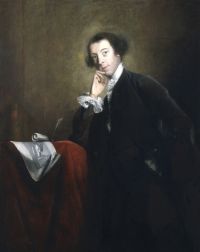
Portrait of Horace Walpole Horace Walpole Memoirs of the Reign of King George the Second…

Sir Robert Walpole, the more you knew him: you would have loved the Duke, if you had not feared him. Pitt liked the dignity of despotism; Lord Mansfield the reality: yet the latter would have served the cause of power, without sharing it: Pitt would have set the world free, if he might not command it. Lord Granville would have preferred doing right, if he had not thought it more convenient to do wrong: Sir Robert Walpole meant to serve mankind, though he knew how little they deserved it; and this principle is at once the most meritorious in oneself and to the world.
Source: Gutenberg

Portrait of Horace Walpole Horace Walpole Memoirs of the Reign of King George the Second…

He saw everything in an ill-natured and ridiculous light—a sure prevention of ever being seen himself in a great or favourable one. The haughtiness of the Duke of Cumberland, the talents or blemishes of Fox, the ardour of Wolfe, the virtue of Conway, all were alike the objects of Townshend’s spleen and contradiction—but Wolfe was not a man to wave his pre-eminence from fear of caricatures.
Source: Gutenberg

Portrait of Horace Walpole Horace Walpole Memoirs of the Reign of King George the Second…

Does their education qualify them for the tenderness required of English juries? Are not military men apt to pique themselves on showing antipathy to every suspicion of cowardice, unless they are very brave and sensible indeed?
For my own part, I would sooner pronounce Lord George a hero for provoking his trial, than a coward for shrinking from the French. He would have been in less danger by leading up the Cavalry at Minden, than in every hour that he went down to the Horse-guards as a criminal. But whatever apology is due to Lord George’s spirit, none offers itself for his judgment.
Source: Gutenberg

Get perspective with Kwize: daily news enlightened by great literature