Summary

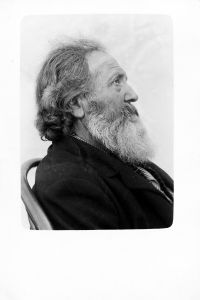
Portrait of Hugh Alexander Webster Hugh Alexander Webster Encyclopædia Britannica, Ninth Edition…

The subjugation of the islands, thanks to the exertions of the Roman Catholic missionaries and to the large powers which were placed in their hands by Philip, was effected, not of course without fighting and bloodshed, but without those appalling massacres and depopulations which characterized the conquest of South America. Contests with frontier rebellious tribes, attacks by pirates and reprisals on the part of the Spaniards, combine with volcanic eruptions, earthquakes, and tornadoes to break the comparative monotony of the subsequent history.
Source: Wikisource

Portrait of Hugh Alexander Webster Hugh Alexander Webster Encyclopædia Britannica, Ninth Edition…

The important island of Cebu (2413 square miles; provincial population, 403,405) is 135 miles long from north to south, but only 30 miles broad at the most. The chief town, Cebu, is the capital of the Visayas group and is next to Iloilo in the matter of commerce. It is only along the coast that cultivation is easy, and none of the villages lie far inland. Parallel with Cebu and separated from it by a strait 15 miles wide, is Negros (4670 square miles; population, 204,669) , with large sugar plantations, but only one large town, Jimamaylan, and no good ports.
Source: Wikisource

Portrait of Hugh Alexander Webster Hugh Alexander Webster Encyclopædia Britannica, Ninth Edition…

To the south-east of Luzon lie the VisayasSamar, Leyte, Bohol, Cebu, Negros, and Panay, with various smaller islands.
Samar (area, 4367 square miles) is separated from the Albay peninsula by the Strait of San Bernardino, 10 miles across. From north west to south-east it is 120 miles long; its greatest breadth is 60 miles. The provincial capital is Catbalongan on the west coast, on a bay difficult of access. The island is watered by a number of considerable streams—the Catubig, Loquilocum or Ulut, Suribao, &c.
Source: Wikisource

Get perspective with Kwize: daily news enlightened by great literature