Summary

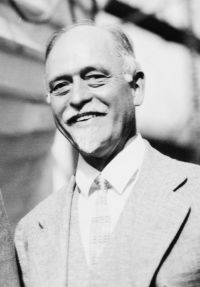
Portrait of Irving Fisher Irving Fisher The Purchasing Power of Money…

XII.100 We conclude that the "rise in the cost of living" is no special movement of food prices nor, presumably, of other particular prices, but is merely a part of the general movement of prices. The cost of living is swept along with the general rising tide of prices of all sorts. It indicates little or no special change in the supply or demand of special classes of goods, but simply reflects the fall in the general purchasing power of money.
Source: Wikisource

Portrait of Irving Fisher Irving Fisher The Purchasing Power of Money…

Whatever raises prices in one country tends to raise prices in all countries, and in the last analysis the only correct way to measure the relative importance of price-raising causes is to consider the world as a whole. If the statistics we have worked out for the United States were typical of the world, the resulting estimate of the relative importance of the four price-raising causes would be true of the world. But there is strong reason to believe that the growth of deposits and of their velocity played a far greater part in raising prices in the United States than anywhere else.
Source: Wikisource

Portrait of Irving Fisher Irving Fisher The Purchasing Power of Money…

But the really important matter is that students of economics should appreciate the existence of a law of direct proportion between quantity of money and price level—a law as real, as important, and as fundamental in the economic theory of money, as Boyle's law of direct proportion between density and pressure is real, is important, and is fundamental in the physical theory of gases. I believe that the frequent failure to realize the existence of this law is due largely to the lack of any clear conception of the magnitudes involved.
Source: Wikisource

Get perspective with Kwize: daily news enlightened by great literature