Summary

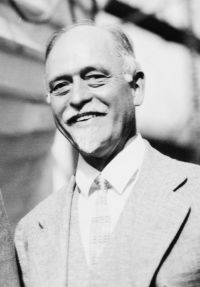
Portrait of Irving Fisher Irving Fisher The Purchasing Power of Money

If, for example, the quantity of money is doubled, and its velocity of circulation is halved, while the quantity of goods exchanged remains constant, the price level will be undisturbed. Likewise, it will be undisturbed if the quantity of money is doubled and the quantity of goods is doubled, while the velocity of circulation remains the same. To double the quantity of money, therefore, is not always to double prices. We must distinctly recognize that the quantity of money is only one of three factors, all equally important in determining the price level.
Source: Wikisource

Portrait of Irving Fisher Irving Fisher The Purchasing Power of Money

III.21 The less the ratio of the value of the stockholders' interests to the value of liabilities to others, the greater is the risk of insolvency; the risk of insufficiency of cash is the greater, the less the ratio of the cash to the demand liabilities. In other words, the leading safeguard against insolvency lies in a large capital and surplus, but the leading safeguard against insufficiency of cash lies in a large cash reserve. Insolvency proper may befall any business enterprise; insufficiency of cash relates especially to banks in their function of redeeming notes and deposits.
Source: Wikisource

Portrait of Irving Fisher Irving Fisher The Purchasing Power of Money

II.30 We all know that, when a balance is in equilibrium, the tendency to turn in one direction equals the tendency to turn in the other. Each weight produces on its side a tendency to turn, measured by the product of the weight by its arm. The weight on the left produces, on that side, a tendency measured by 5,000,000 × 20; while the weights on the right make a combined opposite tendency measured by 200,000,000×.10+200,000,000×.25+90,000,000×.33 1/3. The equality of these opposite tendencies represents the equation of exchange.
Source: Wikisource

Get perspective with Kwize: daily news enlightened by great literature