Summary

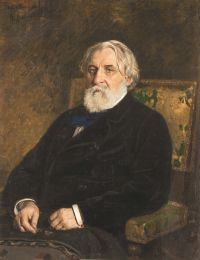
Portrait of Ivan Turgenev Ivan Turgenev On the Eve — Introduction

Briefly, Turgenev, in sketching the dawn of love in a young girl's soul, has managed faintly, but unmistakably, to make spring and flourish in our minds the ineradicable, though hidden, idea at the back of Slav thought—the unification of the Slav races. How doubly welcome that art should be which can lead us, the foreigners, thus straight to the heart of the national secrets of a great people, secrets which our own critics and diplomatists must necessarily misrepresent.
Source: Wikisource

Portrait of Ivan Turgenev Ivan Turgenev On the Eve — Introduction

But each of Turgenev's novels in some subtle way suggests that the people he introduces are playing their little part in a great national drama everywhere around us, invisible, yet audible through the clamour of voices near us. And so On the Eve, the work of a poet, has certain deep notes, which break through the harmonious tenor of the whole, and strangely and swiftly transfigure the quiet story, troubling us with a dawning consciousness of the march of mighty events.
Source: Wikisource

Portrait of Ivan Turgenev Ivan Turgenev On the Eve — Introduction

Time has given contradictory answers to the men of all parties. The Elenas of to-day need not turn their eyes abroad to find their counterpart in spirit; so far at least the pessimists are refuted: but the note of death that Turgenev strikes in his marvellous chapter on Venice has still for young Russia an ominous echo—so many generations have arisen eager, only to be flung aside helpless, that one asks, what of the generation that fronts Autocracy to-day?
Source: Wikisource

Get perspective with Kwize: daily news enlightened by great literature