“ Raoul passed his length of rope around the base of an adjacent tree and stood looking on. The wind was frightful. He had never dreamed it could blow so hard. A sea breached across the atoll, wetting him to the knees ere it subsided into the lagoon. The sun had disappeared, and a lead-colored twilight settled down. A few drops of rain, driving horizontally, struck him. The impact was like that of leaden pellets. A splash of salt spray struck his face. It was like the slap of a man's hand. His cheeks stung, and involuntary tears of pain were in his smarting eyes. ”
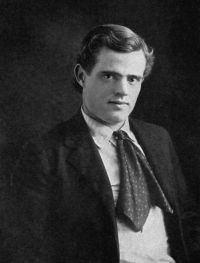
Jack London
Summary
South Sea Tales (1911), a short story collection by Jack London, explores the harsh realities of Pacific island life and maritime danger through tales set in Hawaii, the Solomon Islands, and beyond. Drawing from his own journeys, London crafts narratives of cultural conflict, endurance, and human tenacity, as seen in stories like The Whale Tooth and Mauki, where characters face primal forces and ethical challenges.
The collection, organized around themes of colonialism, native customs, and the tension between civilization and the wild, highlights London’s interest in the untamed human spirit. Its vivid portrayals of atolls, canoes, and storms capture the author’s lasting concern with nature’s indifference and the vulnerability of human achievement.
Quotes from South Sea Tales (Jack London)
Jack London,
South Sea Tales
(1911)
“ It was a low shoal, a bleak and perilous place over which the seas broke unceasingly, where no man could live, and on which not even sea birds could rest. The Pyrenees was swept within a hundred yards of it before the wind carried her clear, and at this moment the panting crew, its work done, burst out in a torrent of curses upon the head of McCoy—of McCoy who had come on board, and proposed the run to Mangareva, and lured them all away from the safety of Pitcairn Island to certain destruction in this baffling and terrible stretch of sea. ”
“ It had been torn from its foundations, and wind and sea were heaving and shoving it toward the lagoon. A frightful wall of water caught it, tilted it, and flung it against half a dozen cocoanut trees. The bunches of human fruit fell like ripe cocoanuts. The subsiding wave showed them on the ground, some lying motionless, others squirming and writhing. They reminded him strangely of ants. He was not shocked. He had risen above horror. Quite as a matter of course he noted the succeeding wave sweep the sand clean of the human wreckage. ”
