“ The Privy Council, of course, would have its meetings, its officers, its records, its rules of proceeding, and its various usages, and these grew, in time, to be laws and rights; but still it was, in theory, only a sort of expansion of the king, as if to make a kind of artificial being, with one soul, but many heads and hands, because no natural human being could possibly have capacities and powers extensive and multifarious enough for the exigencies of reigning. Charles thus had a council who took charge of every thing, except so far as he chose to interpose. ”
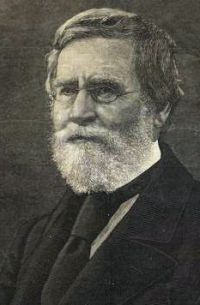
Jacob Abbott
Summary
Jacob Abbott’s Charles I is a historical narrative examining the reign of King Charles I of England, focusing on the tensions between royal authority and parliamentary rule in the 17th century. The text analyzes key figures such as Strafford and Laud, tracing disputes over prerogatives, accusations of treason, and the function of institutions like the Star Chamber and the House of Commons.
Abbott emphasizes the gradual transfer of power from the monarchy to elected representatives, contrasting the symbolic role of the sovereign with the increasing influence of the Commons. The work highlights the transformation of political thought, culminating in a reflection on the contrast between England’s traditional monarchical system and the democratic ideals that would later influence American political development.
Quotes from Charles I (Jacob Abbott)
“ Thus, though every thing in which royalty appeared before the public was conducted with great pomp and parade, this external magnificence was then, and always has been, an outside show, without any thing corresponding to it within. The great mass of the people of England saw only the outside. They gazed with admiration at the spectacle of magnificence and splendor which royalty always presented to their eyes, whenever they beheld it from the distant and humble points of view which their position afforded them. Prince [Pg 33] Charles, on the other hand, was behind the curtain. ”
“ Strafford's letter to the king."To set your Majesty's conscience at Liberty, I do most humbly beseech your Majesty for Prevention of Evils, which may happen by your Refusal, to pass this Bill. Sir, My Consent shall more acquit you herein to God, than all the World can do besides; To a willing Man there is no Injury done; and as by God's Grace, I forgive all the World, with a calmness and Meekness of infinite Contentment to my dislodging Soul, so, Sir, to you I can give the Life of this World with all the cheerfulness imaginable, in the just Acknowledgment of your exceeding Favors ”
