“ During all this time the Black Prince distinguished himself greatly as one of the chief of his father's generals. He grew up to full manhood; and while, like the other warlike chieftains of those days, his life was devoted to deeds of rapine and murder, there was in his demeanor toward those with whom he was at peace, and toward enemies who were entirely subdued, a certain high-toned nobleness and generosity of character, which, combined with his undaunted courage, and his extraordinary strength and prowess on the field of battle, made him one of the greatest lights of chivalry of his age. ”
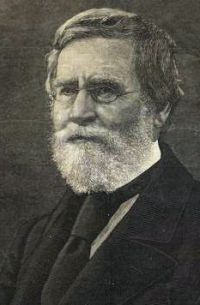
Jacob Abbott
Summary
Jacob Abbott’s Richard II is a historical narrative tracing the reign of King Richard II of England, emphasizing the turbulent interplay between monarchy and the nobility. The text explores themes of royal authority, rebellion, and the chivalric deeds of figures like the Black Prince, Edward, and the tensions between the crown, barons, and insurgents.
Central to the work is the portrayal of Richard’s struggle to uphold power amid factional conflict, culminating in his deposition and the shifting dynamics of allegiance and treachery. Through vivid accounts of battles, court intrigue, and social upheaval, Abbott highlights the vulnerability of royal rule in a divided realm.
Quotes from Richard II (Jacob Abbott)
“ These messengers spread the cry in the city, "To Smithfield! To Smithfield! They are killing the King!" This cry produced universal excitement and alarm. The bands of armed men quartered in London were immediately turned out, and great numbers of volunteers too, seizing such weapons as they could find, made haste to march to Smithfield; and thus, in a short time, the king found himself supported by a body of seven or eight thousand men.Some of his advisers then urged that the whole of this force should fall at once upon the insurgents, and slaughter them without mercy. ”
“ On the morning of the 15th, an imposing train of the nobility, led by all the great officers of state, assembled at the residence of the king to receive him and to escort him through the city. Richard was dressed in magnificent robes, and mounted upon a handsome charger. A nobleman led his horse by the bridle. Another nobleman of high rank went before him, bearing the sword of state, the emblem of the regal power. Other nobles and prelates in great numbers, mounted many of them on splendidly-caparisoned horses, and in full armor, joined in the train. ”
