Summary

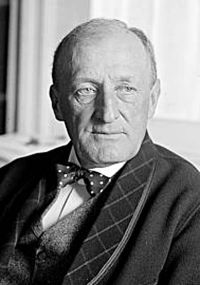
Portrait of James Clark McReynolds James Clark McReynolds Linder v. United States — Opinion of the Court

It may be admitted that to prescribe a single dose, or even a number of doses, may not bring a physician within the penalties of the act; but what is here charged is that the defendant physician by means of prescriptions has enabled one, known by him to be an addict, to obtain from a pharmacist the enormous number of doses contained in 150 grains of heroin, 360 grains of morphine, and 210 grains of cocaine'-3,000 ordinary doses!
Source: Wikisource

Portrait of James Clark McReynolds James Clark McReynolds Linder v. United States — Opinion of the Court

The opinion cannot be accepted as authority for holding that a physician, who acts bona fide and according to fair medical standards, may never give an addict moderate amounts of drugs for self-administration in order to relieve conditions incident to addiction. Enforcement of the tax demands no such drastic rule, and if the act had such scope it would certainly encounter grave constitutional difficulties.
The Narcotic Law is essentially a revenue measure and its provisions must be reasonably applied with the primary view of enforcing the special tax.
Source: Wikisource

Portrait of James Clark McReynolds James Clark McReynolds Linder v. United States — Opinion of the Court

The prescriptions were not issued in the course of professional practice. The doctor became party to prohibited sales.
'Manifestly the phrases 'to a patient' and 'in the course of his professional practice only' are intended to confine the immunity of a registered physician, in dispensing the narcotic drugs mentioned in the act, strictly within the appropriate bounds of a physician's professional practice, and not to extend it to include a sale to a dealer or a distribution intended to cater to the appetite or satisfy the craving of one addicted to the use of the drug.
Source: Wikisource

Get perspective with Kwize: daily news enlightened by great literature