Summary

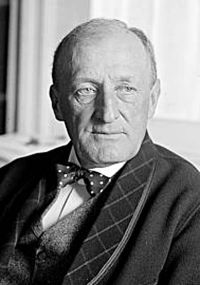
Portrait of James Clark McReynolds James Clark McReynolds Untermyer v. Anderson — Opinion of the Court

The gift tax was imposed largely to prevent evasion of the estate tax by gifts inter vivos, and evasion of the income tax by the splitting up of fortunes and the consequent diminution of surtaxes. If, as is thought by the Court, Congress intended the gift tax to apply to all gifts during the calendar year, its purpose may well have been to prevent evasion of the gift tax itself, by the making of gifts after its introduction and prior to its passage. Is Congress powerless to prevent such evasion by the vigilant and ingenious?
Source: Wikisource

Portrait of James Clark McReynolds James Clark McReynolds Untermyer v. Anderson — Opinion of the Court

Holden, 275 U.S. 142, 48 S.C.t. 105, 72 L. Ed. 206, November 21, 1927, the proper one, I shall not go into the question of constitutionality beyond saying that I find it hard to state to myself articulately the ground for denying the power of Congress to lay the tax. We all know that we shall get a tax bill every year. I suppose that the taxing act may be passed in the middle as lawfully as at the beginning of the year. A tax may be levied for past privileges and protection as well as for those to come.
Source: Wikisource

Portrait of James Clark McReynolds James Clark McReynolds Untermyer v. Anderson — Opinion of the Court

The mere fact that a gift was made while the bill containing the questioned provisions was in the last stage of progress through Congress we think is not enough to differentiate this cause from the former one and to relieve the legislation of the arbitrary character there ascribed to it. To accept the contrary view would produce insuperable difficulties touching interpretation and practical application of the statute and render impossible proper understanding of the burden intended to be imposed.
Source: Wikisource

Get perspective with Kwize: daily news enlightened by great literature