Summary

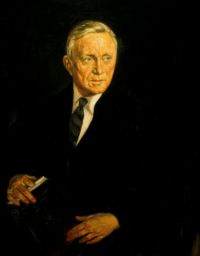
Portrait of William O. Douglas William O. Douglas Lewyt Corporation v. Commissioner of Internal Revenue…

Here we are not compelled in our choice by austere regard for what Congress has written, undistorted or unmitigated by judicial rewriting, no matter what the consequences in a specific case. Where the taxing measure is clear, of course, there is no place for loose conceptions about the 'equity of the statute.' Revenue laws are notoriously not expressions of an ordered system of reason and fairness. There has probably never been a revenue statute which, by design or oversight, has not favored some groups and laid the basis for a claim of unfairness to other similarly situated.
Source: Wikisource

Portrait of William O. Douglas William O. Douglas Lewyt Corporation v. Commissioner of Internal Revenue…

If Congress thought it necessary specifically to direct that a certain adjustment to 1944 net income arising from facts developed in later years should not be made, this can only be because Congress assumed that in applying the formula the figures used would reflect such adjustments. We recognize this assumption by taking as the 1944 net income figure the originally reported figure less the amount by which it was reduced as a consequence of renegotiation. There is no basis for differentiation, in recognizing this assumption, between net income and excess profits tax.
Source: Wikisource

Get perspective with Kwize: daily news enlightened by great literature