Summary

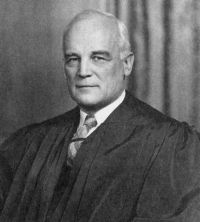
Portrait of Harold Hitz Burton Harold Hitz Burton United States v. Koppers Company…

In cases where the Government has authorized refunds of excess profits taxes overpaid to it by reason of the abatement of taxes attributable to § 722, § 3771 (g) expressly precludes the payment of interest by the Government upon the amounts abated. This treats the Government as entitled to the use of the abated amounts between the time of their overpayment and that of their abatement. Equity demands a comparable result in the case of underpayments. Where unpaid taxes are abated by reason of § 722, the taxpayer then receives a release from its existing obligation to pay the amount abated.
Source: Wikisource

Portrait of Harold Hitz Burton Harold Hitz Burton United States v. Koppers Company…

The condition was that the taxpayer's 'adjusted excess profits net income (computed without reference to section 722) ' must exceed 50% of the taxpayer's normal tax net income for the year. Even then, deferment was limited to 33% of the benefit claimed under § 722. If a taxpayer, without this amendment, could have successfully deferred payment and avoided interest charges by following the course taken in the instant cases, it could, by understatement of its tax, have deferred, without incurring interest charges, the payment of a corresponding part of its tax pending relief.
Source: Wikisource

Portrait of Harold Hitz Burton Harold Hitz Burton United States v. Koppers Company…

We find no implication that a self-serving error in the understatement of its tax on its tax return entitles the taxpayer to a greater ultimate tax advantage than does a self-serving error of the same size in the underpayment of the same tax. A fortiori we find nothing to justify a greater tax advantage to any taxpayer that underpays its correct tax, over one that pays such tax in full when due.
Source: Wikisource

Get perspective with Kwize: daily news enlightened by great literature