Summary

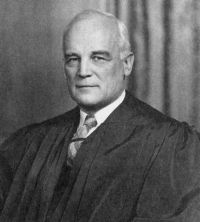
Portrait of Harold Hitz Burton Harold Hitz Burton Lykes v. United States — Opinion of the Court

And so the gifts caused the expense. The fallacy of such logic is that it would be just as possible to employ it to prove that the lawyer's fees were caused by having children. If there had been no children there would have been no gift, and if no gift no tax, and if no tax no deficiency, and if no deficiency no contest, and if no contest no expense. Hence, the lawyer's fee was not due to the contest at all but was a part of the cost of having babies.
Source: Wikisource

Portrait of Harold Hitz Burton Harold Hitz Burton Lykes v. United States — Opinion of the Court

On the other hand, if the same plaintiff on the same facts asked for $5,000, $10,000 or $100,000 damages, and the defendant held some income-producing property, that defendant might be permitted to deduct from his taxable income the same expense for precisely the same services as those upon which his less well-to-do neighbor would have to pay a tax in the other case. It is not a ground for defense that the claim, if justified, will consume income-producing property of the defendant.
Source: Wikisource

Portrait of Harold Hitz Burton Harold Hitz Burton Lykes v. United States — Opinion of the Court

Generally a gift is the antithesis of such production or collection because it reduces the donor's resources whether income producing or not. However, petitioner suggests that although he stated in his gift tax return that the purpose of his gifts was to express his love for the donees, yet the gifts were part of a general plan to produce income for himself.
Source: Wikisource

Get perspective with Kwize: daily news enlightened by great literature