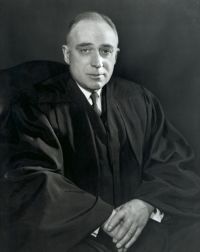
John Marshall Harlan II

John Marshall Harlan II

Summary

Portrait of John Marshall Harlan II John Marshall Harlan II Rudolph v. United States — Dissent

If a taxpayer who travels to a destination engages in both 'business and personal activities,' the traveling expenses are deductible only if the trip is 'related primarily' to the taxpayer's business; if 'primarily personal,' the traveling expenses are not deductible even though the taxpayer engages in some business there; yet expenses allocable to the taxpayer's trade or business there are deductible even though the travel expenses to and fro are not.
Source: Wikisource

Portrait of John Marshall Harlan II John Marshall Harlan II Rudolph v. United States — Dissent

The Government admits that not all 'fringe benefits' have been taxed as income, but it is enough to point out here that the withholding tax analogy is not perfect, for payments to laid-off employees from company-financed supplemental unemployment benefit plans are 'taxable income' to the employees although not 'wages' subject to withholding.
Source: Wikisource

Portrait of John Marshall Harlan II John Marshall Harlan II Rudolph v. United States — Dissent

Petitioners, husband and wife, reside in Dallas, Texas, where the home office of the husband's employer, the Southland Life Insurance Company, is located. By having sold a predetermined amount of insurance, the husband qualified to attend the company's convention in New York City in 1956 and, in line with company policy, to bring his wife with him. The petitioners, together with 150 other employees and officers of the insurance company and 141 wives, traveled to and from New York City on special trains, and were housed in a single hotel during their two-and-one-half-day visit.
Source: Wikisource

Get perspective with Kwize: daily news enlightened by great literature