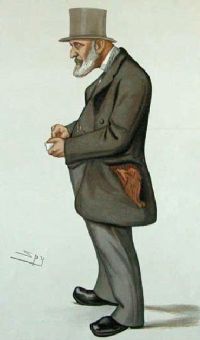
James Edwin Thorold Rogers

James Edwin Thorold Rogers

Summary

Portrait of James Edwin Thorold Rogers James Edwin Thorold Rogers The Story of Nations - Holland… (1886)

No doubt the King of Spain and his advisers had satisfied themselves that the acknowledgment of independence was an empty form, that no faith need be kept with heretics, and would not be kept as soon as it was possible or convenient to break it.
It may seem strange to us, that the Dutch Republic should have refused so obstinately to admit the principle of religious liberty or even of toleration. But, in the first place, it was outrageous for this to be forced on them by a foreign government, which had already declared them free, and was itself the most intolerant government in existence.
Source: Wikisource

Portrait of James Edwin Thorold Rogers James Edwin Thorold Rogers The Story of Nations - Holland… (1886)

We may be able to trust Dutchmen, however we may think that they err in matters of religious belief. They are our own people, and will not lightly commit treason against us. But the case is wholly different with the Jesuits and Friars. Yield to the King of Spain and the Archdukes on this point, and our country will be at once infested with these vermin, the common enemies of mankind, with whom honest men can no more have truce than with a wolf.
Source: Wikisource

Portrait of James Edwin Thorold Rogers James Edwin Thorold Rogers The Story of Nations - Holland… (1886)

If the Roman Catholics, in Holland, suffer some loss of religious freedom, if they are constrained to perform their devotions in private, they may thank the bad faith of Spain for the disabilities under which they labour. If a king or government thinks proper to allege that it will be bound by no promises and no pledges, it must not wonder that another government is distrustful of its secret emissaries, and watches them suspiciously.
Source: Wikisource

Get perspective with Kwize: daily news enlightened by great literature