Summary

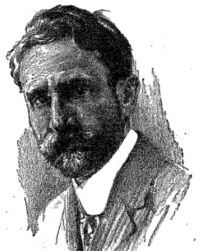
Portrait of James Henry Leuba James Henry Leuba The Psychological Origin and the Nature of Religion… (1909)

We think because we will. Thought does not exist for itself; it is the instrument of desire. To discover ways and means of gratifying proximate or distant desires, needs, cravings, is the function of intelligence. The psychologist speaks, therefore, of the instrumental character of thought, and considers cognition to be a function of conduct. The mastery of desire over thought is abundantly illustrated in the history of belief, and nowhere so strikingly as in Religion.
Source: Wikisource

Portrait of James Henry Leuba James Henry Leuba The Psychological Origin and the Nature of Religion… (1909)

Will, feeling, and thought enter in some degree into every moment of consciousness which can be looked upon as an actuality, and not merely as an abstraction; they are necessary constituents of consciousness. The unit of conscious life is neither thought, nor feeling, nor will, but all three in movement towards an object.
Source: Wikisource

Portrait of James Henry Leuba James Henry Leuba The Psychological Origin and the Nature of Religion… (1909)

The students of Religion have usually been content to describe it either in intellectual or in affective terms. ‘This particular idea or belief,’ or ‘this particular feeling or emotion,’ is, they have said, ‘the essence’ or the ‘vital element’ of Religion. So that most of the hundreds of definitions which have been proposed fall into two classes. We have, on the one hand, the definitions of Spencer, Max Müller, Romanes, Goblet d’Alviella, and others, for whom Religion is ‘the recognition of a mystery pressing for interpretation,’ or ‘a department of thought,’ or ‘a belief in superhuman beings’
Source: Wikisource

Get perspective with Kwize: daily news enlightened by great literature