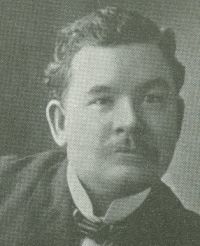
James Joseph Walsh

James Joseph Walsh

Summary

Portrait of James Joseph Walsh James Joseph Walsh,  Catholic Encyclopedia (1913)

“ Pasteur's faith was as genuine as his science. In his panegyric of Littré, whose fauteuil he took, he said: "Happy the man who bears within him a divinity, an ideal of beauty and obeys it; an ideal of art, an ideal of science, an ideal of country, an ideal of the virtues of the Gospel". These words are graven above his tomb in the Institut Pasteur. In his address Pasteur said further "These are the living springs of great thoughts and great, actions. Everything grows clear in the reflections from the Infinite". ”
Source: Wikisource

Portrait of James Joseph Walsh James Joseph Walsh,  Catholic Encyclopedia (1913)

“ From this the demonstration that spontaneous generation does not take place was but a step. He showed that in highly-organized material, if the living germs are all destroyed, and if further access of germs be prevented, even though air may be allowed free access, fermentation or putrefaction does not take place. A piece of cotton wool, or a mere bending of the neck of the flask to keep germs from entering, is sufficient after sterilization to keep organic solutions quite sterile. The study of fermentations led Pasteur to studies in vinegar, wine, and beer. ”
Source: Wikisource

Portrait of James Joseph Walsh James Joseph Walsh,  Catholic Encyclopedia (1913)

“ Naturally Pasteur proceeded to the study of diseases of animals and human beings. He demonstrated the bacterial cause of anthrax, which had made serious ravages among cattle in France. The organism was distributed by contact, real contagion. Earthworms, he showed, carry it up from the bodies of animals buried in shallow graves to infect grazing animals. He found further that he could by heat reduce the vitality of the anthrax microbe, so that it produced but a mild form of the disease which would protect cattle against the fatal form. ”
Source: Wikisource

Get perspective with Kwize: daily news enlightened by great literature