Summary

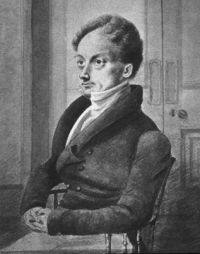
Portrait of James Mill James Mill Jurisprudence — Section I. (1825)

You cannot give all your advantages to every one; you must share them out. If you do not give equal rights to all, you can only give more than an equal share to some, by diminishing the share of others, of whom, while you diminish the rights, you increase the obligations. This is the course which bad governments pursue; they increase the rights of the few, and diminish the rights of the many, till, in the case of governments virtually despotic, it is all right on the one side, all obligation on the other.
Source: Wikisource

Portrait of James Mill James Mill Jurisprudence — Section I. (1825)

Rights may truly be considered as equal, when all the sorts of obligation under which a man lies with respect to other men, they are placed under with respect to him: if all the abstinence which he is obliged to practise with respect to their property, they are obliged to practise with respect to his; if all the rules by which he is bound not to interfere with their actions bind them equally not to interfere with his. It is evident, that inequality of fortune is not excluded by equality of rights.
Source: Wikisource

Portrait of James Mill James Mill Jurisprudence — Section I. (1825)

Every obligation is a burthen; an interdiction from the objects of desire. The one is in itself a good; the other is in itself an evil. It would be desirable to increase the good as much as possible. But, by increasing the good, it necessarily happens that we increase the evil. And, if there be a certain point at which the evil begins to increase faster than the good, beyond that point all creation of rights is hostile to human welfare.
The end in view is a command over the objects of desire. If no rights are established, there is a general scramble, and every man seizes what he can.
Source: Wikisource

Get perspective with Kwize: daily news enlightened by great literature