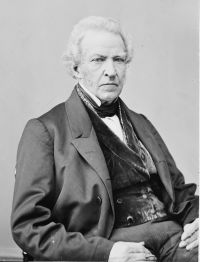
 James Moore Wayne,
Homer v. Brown — Opinion of the Court
James Moore Wayne,
Homer v. Brown — Opinion of the Court
“ The third bequest to Samuel is one fourth part of a mass of real and personal estate as it is mentioned in the will, and all of his other property not before or hereafter disposed of, as the same may be turned into money, with this direction to his executor, to vest one half of one fouth of it in stock or real estate, 'the dividend or rent of which is to be paid to Samuel as it may arise, and the principal or premises to descend to his heirs.' The testator then bequeathes to Samuel the other half of that fourth in money when collected to stock his farm or for other purposes. ”
