Summary

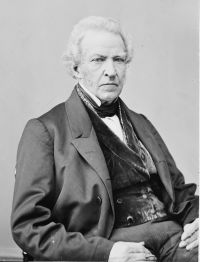
Portrait of James Moore Wayne James Moore Wayne Walker v. Bank of Washington — Opinion of the Court

The defendants in the court below deny that the plaintiffs have any right of action upon the note sued on, on the ground that the first note was tainted with usury.
Such is the law in such a case. The mere change of securities for the same usurious loan to the same party who received the usury, or to a person having notice of the usury, does not purge the original illegal consideration, so as to give a right of action on the new security. Every subsequent security given for a loan originally usurious, however remote or often renewed, is void.
Source: Wikisource

Portrait of James Moore Wayne James Moore Wayne Walker v. Bank of Washington — Opinion of the Court

Nor do we think that there was any error in the instruction given by the court to the jury under the defendant's first prayer. The court sufficiently distinguish between the facts of the cashier's evidence and his belief, and tell the jury that they are to determine by the facts whether the cashier's inferences were justified.
The judgment of the court is affirmed.
Notes
This work is in the public domain in the United States because it is a work of the United States federal government (see 17 U.S.C. 105) .
Source: Wikisource

Portrait of James Moore Wayne James Moore Wayne Walker v. Bank of Washington — Opinion of the Court

But such is not the case before us. The defendant, Walker, had entered into a contract with the United States to supply the navy with beef, and to enable himself to do it, he applied to the bank, by letter dated the 30th January, for a loan of $25,000, and offered as a security a draft upon E. Kane, the navy agent, and also to assign to the bank the beef which he might put up.
Source: Wikisource

Get perspective with Kwize: daily news enlightened by great literature