Summary

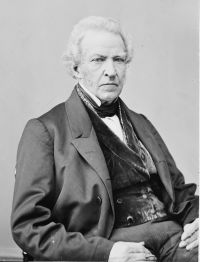
Portrait of James Moore Wayne James Moore Wayne Williamson v. Berry — Opinion of the Court

Hamilton, from the start of his buying or meaning to buy from Clarke, that he would not approve the sale, and make such a certificate of it, upon the paper given to him by Clarke, upon such a consideration for the property?
We find the answer to our inquiries in the long experience and practice in chancery. In any sale under a decree or order in chancery, the purchaser, before he pays his money, must not only satisfy himself that the title to the property to be sold is good, but he must take care that the sale has been made according to the decree or order.
Source: Wikisource

Portrait of James Moore Wayne James Moore Wayne Williamson v. Berry — Opinion of the Court

And in no event could a sale by Clarke, in conformity with the order, have been a judicial sale, but simply a sale by a private individual authorized to make it under acts passed for his relief, and assented to by the Chancellor, for the purpose of ultimately substantiating and verifying by a court of record the transfer of the property. It was a sale made without process, not by an officer in any sense of the word, but by a private person to a private person, after negotiation between them, and done by one of them, who had only in a particular way the assent of the Chancellor to sell.
Source: Wikisource

Portrait of James Moore Wayne James Moore Wayne Williamson v. Berry — Opinion of the Court

Upon the first of them, relating to the premises having been parted with by Clarke to De Grasse, upon a consideration other than cash, we remark that sale is a word of precise legal import, both at law and in equity. It means at all times, a contract between parties, to give and to pass rights of property for money, which the buyer pays or promises to pay to the seller for the thing bought and sold.
Source: Wikisource

Get perspective with Kwize: daily news enlightened by great literature