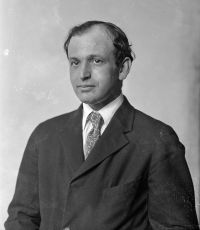
James Oppenheim

James Oppenheim

Summary

Portrait of James Oppenheim James Oppenheim Bits of Glass (1912)

The "risk" was a belated truck in the lonely, lamplit spaces of upper Broadway. The curses of the driver followed us. And as Henley let out the speed, I felt again the correspondence between himself and the machine. This one-time rebel had become, like the machine, a civilized efficient: swift, dynamic, harmonized: yet something of wings surely. All the car's power, its life, gathered through every part of it and poured itself, machine and all, into space-annihilating speed. It was a specialist in speed.
Source: Wikisource

Portrait of James Oppenheim James Oppenheim Bits of Glass (1912)

A CLEAN new moon followed me at the right—only twenty minutes before I had seen it dulling the black of the Hudson from above the Palisades—when I came down the lamp-spaced road of Van Cortlandt Park. Each lamp dimmed the moon and the stars, but there were stretches where the trees became alive, and curves that revealed, far away, the lights—the parallel lines, the rectangles of the night city, and once, perched on its hill, the electric park of Washington Heights hanging like a fairy world in the skies.
Source: Wikisource

Portrait of James Oppenheim James Oppenheim Bits of Glass (1912)

I should have been less surprised to have seen Henley come running down the road clad only in tar and feathers, with a mob howling at his back, for he had always been one of those careless yet incisive people who plant mental dynamite wherever they go. In fact, he had been a wild and shabby young doctor: an experimental Don Juan, a joyous revolutionist, a lawbreaker, not through perversity but through his love for Utopia. And here he was spectacled and citified, hitched up to an automobile, with only his altercation with a policeman to remember his youth by.
Source: Wikisource

Get perspective with Kwize: daily news enlightened by great literature