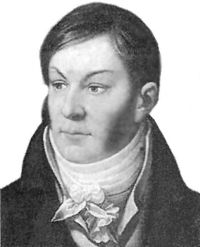
Johann August Apel

Johann August Apel

Summary

Portrait of Johann August Apel Johann August Apel Forget Me Not (1826)

A dismal silence of some seconds which followed this speech was suddenly broken by a ghastly laugh from the black knight, which shook the very walls of the castle. “This maiden,” cried he, “is mine; she gave herself to me; she won me by a crime—a midnight crime—for which each midnight she must suffer. She is my bride; and my bride she must remain, and nightly be decked in these burning ornaments, till the jewels shall return to their rightful owner: meddle not then with the matter, Sir Knight, but deign to partake of our cheer.”
Source: Wikisource

Portrait of Johann August Apel Johann August Apel Forget Me Not (1826)

The wind whistled frostily over the stubbles, and the rain and hail beat (without much difficulty, it must be confessed) through the windows of Sir Baldwin’s castle. The coldness of his home determined him to quit it; and having formed his resolution, he hastened to the knight of Aarburg, to entreat his assistance and approbation of the measure. “Good Sir Thimo,” said he, “I can no longer sit idly down in my dismantled castle; the storms are playing as cruel a game with that as love is doing with my heart.
Source: Wikisource

Portrait of Johann August Apel Johann August Apel Forget Me Not (1826)

These, however, were soon produced from the alchymical chimney. It really hailed men and women, who, in the most magnificent festival dresses, took their seats upon the chairs, or walked gaily about the apartment. The last comer was a young and lovely lady, beautiful as moonlight, and as pale: her countenance was like the sigh of an angel, full of grief, but of unspeakable sweetness. By her side walked a gigantic knight, black and terrible to look upon: there was a laughing fury curling round his lips, and his eyes were dark thunder-clouds, emitting flashes of lurid lightning.
Source: Wikisource

Get perspective with Kwize: daily news enlightened by great literature