Summary

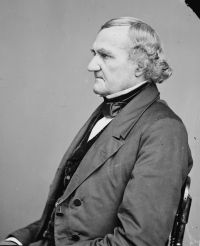
Portrait of John Catron John Catron Barnard v. Ashley — Opinion of the Court

According to the conceded facts, it is insisted, on the part of Ashley and Craig, that the register and receiver having, on due proof and examination, rejected Barnard's claims to a preference of entry of the four quarter sections, he is thereby concluded from setting them up in a court of equity, because the register and receiver acted in a judicial capacity, and their judgment, being subject to no appeal, is conclusive of the claim.
Source: Wikisource

Portrait of John Catron John Catron Barnard v. Ashley — Opinion of the Court

In cases, however, like the one before us, where an entry had been allowed on ex parte affidavits, which were impeached, and the land claimed by another, founded on an opposing entry, the course pursued at the general land-office was to return the proofs and allegations, in opposition to the entry, to the district office, with instructions to call all the parties before the register and receiver, with a view of instituting an inquiry into the matters charged; allowing each party, on due notice, an opportunity of cross examining the witnesses of the other, each being allowed to introduce proofs
Source: Wikisource

Portrait of John Catron John Catron Barnard v. Ashley — Opinion of the Court

When the last examination was had before the register and receiver in 1837, Barnard's own witnesses, Philip Booth and John F. Harrison, swore the facts to be, that Barnard had 'deadened the timber and cleared away the cane,' on a part of S. E. qr. sec. 22; that he fenced it early in 1834, and made a crop of corn on it that year, and was in possession June 19, 1834. Booth, in a subsequent affidavit, contradicts his first statement. That there was no cultivation on the quarter section in 1833, we think is satisfactorily established; nor had Barnard any right to enter it.
Source: Wikisource

Get perspective with Kwize: daily news enlightened by great literature