Summary

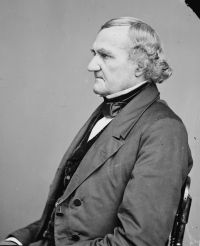
Portrait of John Catron John Catron,  Jenkins v. Pye — Concurrence

“ It is but justice, however, to say, that I do not suppose either of those highly respectable authors intended to question the doctrine in a case like the present; where the estate in reversion descended upon an infant heir, encumbered with a life interest, and the expectancy was given to the tenant for life, within eighteen months after the heir came of age. That such purchase is a constructive fraud, and the purchaser, if a stranger, compelled to account, and give up his bargain, if found to be advantageous; has not, for a century, been an open question. ”
Source: Wikisource

Portrait of John Catron John Catron,  Jenkins v. Pye — Concurrence

“ The elements of the decree below were, 1. That the grantor, Eleanor Jenkins, was a young heir, and a woman, when she made the conveyance; that it was of her whole estate, without consideration, and to a parent of large wealth.
2. That she was an heir of an estate in reversion, which descended to her in tender infancy; and in regard to the possession and enjoyment of which she must be deemed and treated, in a court of chancery, as an expectant heir.
3. She conveyed to the adult tenant for life, who was her father and natural guardian, with whom she resided, and on whom she was dependent.
”
Source: Wikisource

Portrait of John Catron John Catron,  Jenkins v. Pye — Concurrence

“ De Faria, 17 Vesey, 23, it will be laid down, that 'this is the case of a person who, in this court, is considered as an expectant heir;' and 'that it is incumbent upon those who have dealt with an expectant heir, relative to his reversionary interest, to make good the bargain: that is, to be able to show that a full and adequate consideration was paid. In all such cases, the issue is upon the adequacy of price; no proof of fraud is necessary ”
Source: Wikisource

Get perspective with Kwize: daily news enlightened by great literature