Summary

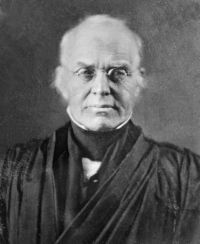
Portrait of Joseph Story Joseph Story Holt v. Rogers — Opinion of the Court

If the parties had intended the sale to be absolute, the bond of Dickinson would have contained an absolute agreement to pay that balance, as the other bond did an absolute agreement to make a conveyance, when required. We think too, that the total omission of Dickinson, in his lifetime, to take any step to enforce the sale, furnishes a strong corroboration that he so understood the matter.
But in the next place, if this difficulty could be (as we think it cannot be) surmounted, the objection from the lapse of time is equally decisive.
Source: Wikisource

Portrait of Joseph Story Joseph Story Holt v. Rogers — Opinion of the Court

On its face, the obligation to Dickinson is plain and unequivocal. It is an obligation for the conveyance according to the recited sale of a tract of land. It is free from doubt, and needs no construction. Shall this unequivocal obligation be destroyed by construction of another obligation which recites the same sale, the obligation to convey, the receipt of forty-five pounds in part payment for the land, and by an obligation upon the purchaser to pay the residue of the purchase money to the vendor, after conveyance made, in pursuance of the sale?
Source: Wikisource

Portrait of Joseph Story Joseph Story Holt v. Rogers — Opinion of the Court

It is manifest that no satisfaction in land or money has ever been made to Dickinson, or his representatives, by the obligor or his representatives.
Rogers was bound to do the first acts: to acquire the patent and a fair title, and to tender a conveyance. They took until 1815 to place themselves in a posture to convey a fair and undisputed title. Within due time thereafter the complainants pursued their rights. The defendants now would take advantage of their own laches to defeat the complainants!
Source: Wikisource

Get perspective with Kwize: daily news enlightened by great literature