Summary

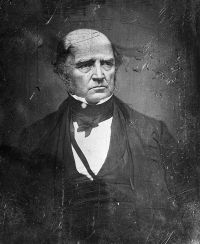
Portrait of Levi Woodbury Levi Woodbury United States v. Price (50 U.S. 83…

It is a peculiar excellence in chancery, on many occasions, that it goes behind writings, and even sealed instruments and judgments, to ascertain how the original transaction stood, and what were its true obligations, in order to enforce them. The joint judgment here did not create the original liability to pay, and hence equity can as properly go back of it to see what the original liability was, and if several no less than joint; as it goes back of a joint bond when 'it was not the bond which first created the liability to pay.' 2 Williams on Executors, 1370.
Source: Wikisource

Portrait of Levi Woodbury Levi Woodbury United States v. Price (50 U.S. 83…

If, then, the joint judgment had been more clearly a technical merger of the joint and several debt here, and no several action would afterwards lie at law on the note, would it not be just and right on principle to grant this separate aid in chancery? So strong is this principle, we have already seen, that sometimes it is provided by express legislation that at law a suit may still be prosecuted against the surviving debtor and the executor of the deceased debtor together on a joint obligation, or, if existing in a judgment, be enforced against the property of either.
Source: Wikisource

Portrait of Levi Woodbury Levi Woodbury United States v. Price (50 U.S. 83…

Again, on equitable grounds, it seems obvious that after a joint judgment against joint and several obligors, which binds still the person and property of either as much as if the judgment had been several, the property of each should continue liable as much as if the contract had been never sued, or had been sued severally. And a fortiori should this be the case in equity, where judgments form a lien on the property of all the respondents, and a joint judgment, as here, bound the estate of the deceased co-obligor.
Source: Wikisource

Get perspective with Kwize: daily news enlightened by great literature