Summary

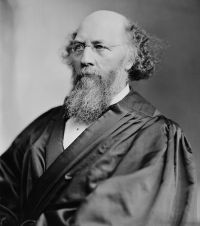
Portrait of Stephen Johnson Field Stephen Johnson Field Bank v. Partee — Opinion of the Court

The Code of 1857 enacted that the property owned by a woman at the time of her marriage, or which shall subsequently some to her, shall be her separate property, and not be subject to the debts of her husband, but shall be liable for her own debts contracted before marriage. At the same time, it authorized a married woman, either by herself or conjointly with her husband, to contract with reference to her separate property for its lease, use, and improvement, and the construction of buildings upon it
Source: Wikisource

Portrait of Stephen Johnson Field Stephen Johnson Field Bank v. Partee — Opinion of the Court

The judgment is simply a personal one; and a judgment of that character against a married woman is a nullity under the laws of Mississippi.
At common law, a married woman is incapable, except in a few special cases, of contracting a personal obligation. Her disability in this respect, by reason of her coverture, cannot be overcome by any form of acknowledgement or mode of execution, or by her uniting with her husband in the contract.
Source: Wikisource

Portrait of Stephen Johnson Field Stephen Johnson Field Bank v. Partee — Opinion of the Court

In several cases which have arisen under these provisions, it has been held by the Supreme Court of Mississippi that unless a married woman has a separate estate she is subject, as to her contracts, to the disability of coverture, and that a creditor suing her must, in his bill in equity or declaration at law, aver that she has such an estate, and that the debt is a charge upon it or ought to be paid out of it.
Source: Wikisource

Get perspective with Kwize: daily news enlightened by great literature