Summary

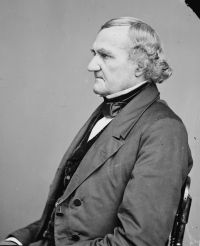
Portrait of John Catron John Catron Clark v. Smith — Opinion of the Court

The legislature having declared that he who has the legal and equitable title, and the possession, may treat the adverse claimant as a trustee, and coerce a release to himself of the inferior claim; of course the statute secures a highly valuable right; which it is the duty of the Courts to enforce, and which can only be enforced in a Court of Equity.
Source: Wikisource

Portrait of John Catron John Catron Clark v. Smith — Opinion of the Court

And such is the constant course of the federal Courts. For instance, in Tennessee, the legislature has provided that the Courts of Equity may divest a title, and vest it in another party to the suit; and that the decree shall operate as a legal conveyance. So in Kentucky, the legislature has declared that the Courts may appoint a commissioner to convey as the attorney in fact of a litigant party
Source: Wikisource

Portrait of John Catron John Catron Clark v. Smith — Opinion of the Court

Kentucky has the undoubted power to regulate and protect individual rights to her soil, and to declare what shall form a cloud on titles; and having so declared, the Courts of the United States, by removing such clouds, are only applying an old practice to a new equity created by the legislature, having its origin in the peculiar condition of the country. The unappropriated lands of that state have been opened to entry and grant at a very cheap rate, as this record shows; which policy has let in the abuse, sought to be remedied by the bill.
Source: Wikisource

Get perspective with Kwize: daily news enlightened by great literature