Summary

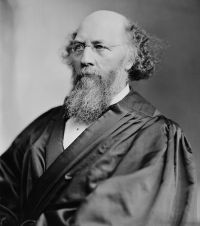
Portrait of Stephen Johnson Field Stephen Johnson Field Stark v. Starr — Opinion of the Court

If in the light of these facts, and all the attending circumstances, the defendant could now successfully impugn the ratification made by his attorney, deny the promises made by himself, and deprive the complainant of the property and improvements, it would be a reproach to the administration of justice. Upon every principle of law and morals, he should be for ever enjoined from the commission of such injustice, and be compelled to quiet the title of the complainant by a release of all claim to the premises.
Source: Wikisource

Portrait of Stephen Johnson Field Stephen Johnson Field Stark v. Starr — Opinion of the Court

A decision upon one could not possibly be a bar to proceedings upon the other, from their intrinsically distinct nature. Having required the complainants to proceed in that suit only upon one cause or ground for relief, the court left the other cause open for any future suit which they might choose to bring.
To appreciate and give proper effect to the agreement made by Stark with parties through whom the complainant derives his interest, and upon which he founds his claim to equitable relief in this suit, reference must be had to the condition on which land in Oregon was held at that time.
Source: Wikisource

Portrait of Stephen Johnson Field Stephen Johnson Field Stark v. Starr — Opinion of the Court

They not only occupied, cultivated, and improved such portions as their necessities required, but they bought and sold it as land is bought and sold where the title has passed out of the government. This dealing in the land without having the title arose necessarily from the settlement of the country before the laws of the United States were extended over it. Indeed, a large number of emigrants from the United States had settled in the country whilst its sovereignty was in dispute with Great Britain.
Source: Wikisource

Get perspective with Kwize: daily news enlightened by great literature