Summary

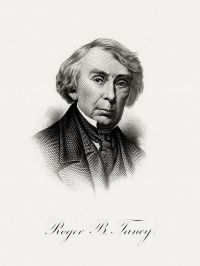
Portrait of Roger B. Taney Roger B. Taney Florida v. State of Georgia — Opinion of the Court

But the court do not regard the United States, in this mode of proceeding, as either plaintiff or defendant; and they are, therefore, not liable to a judgment against them, nor entitled to a judgment in their favor. We consider the attorney-general as the proper officer to represent the United States in this court; and that the general government, in bringing before us for consideration the rights and interest of the Union in the question to be decided, does nothing more than perform a duty imposed upon it by the constitution.
Source: Wikisource

Portrait of Roger B. Taney Roger B. Taney Florida v. State of Georgia — Opinion of the Court

It is manifest, if the facts stated in the suggestion of the attorney-general are supported by testimony, that the United States have a deep interest in the decision of this controversy. And if this case is decided adversely to their rights, they are without remedy, and there is no form of proceeding in which they could have that decision revised in this court or anywhere else. Justice, therefore, requires that they should be heard before their rights are concluded.
Source: Wikisource

Portrait of Roger B. Taney Roger B. Taney Florida v. State of Georgia — Opinion of the Court

On the contrary, where third persons are found to have such an interest in the subject of litigation that they ought to be heard before a judgment, these persons are required to be made parties, to the intent that all persons in interest may be concluded by the final award of the tribunal. This is emphatically true in regard to equity proceedings in the court of chancery, and not less in regard to the crown than to private persons. This is abundantly evident from cases cited by the attorney-general in support of his motion.
Source: Wikisource

Get perspective with Kwize: daily news enlightened by great literature