Summary

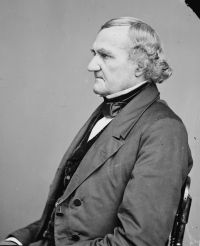
Portrait of John Catron John Catron Galloway v. Finley — Opinion of the Court

It is difficult to conceive how an irregular patent could exist, unless it passed no title. We will not perplex the decision with supposed cases of irregular surveys, but examine the act of congress, and ascertain its effect as regards the grant in the name of Charles Bradford. It is fair upon its face, and we will not took behind it for irregularities. 7 Wheat. 214. The death of the grantee is an extrinsic fact, not impairing the equity of the claim as against the government. His heirs had an interest in common in the military district, with all similar claimants.
Source: Wikisource

Portrait of John Catron John Catron Galloway v. Finley — Opinion of the Court

It seems respondents were at that time equally ignorant, not knowing, or having overlooked the dates of the entries and patents. If complainant had not entered the lands, then he would have been entitled to a rescission of the contract; had no title been acquired by the defendants, through the medium of congress.
The principal ground relied on for relief being, that the patents were void, because made after Charles Bradford's death; we will proceed to examine it. That a patent thus made, passes no title, is true in the nature of things; there must be a grantee before a grant can take effect
Source: Wikisource

Portrait of John Catron John Catron Galloway v. Finley — Opinion of the Court

If Finley has the title, and can perform the contract on the 1st day of January, 1839, when the last payment falls due, this is all the law can require of him. Yet it is an established rule in equity, that where the vendor has not the power to make title, the vendee may, before the time of performance, enjoin the payment of the purchase money, until the ability to comply with the agreement for title is shown
Source: Wikisource

Get perspective with Kwize: daily news enlightened by great literature