Summary

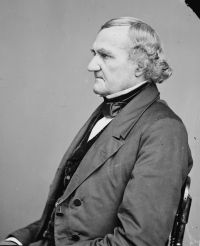
Portrait of John Catron John Catron Lessee of French v. Spencer — Opinion of the Court

In Indiana, it is provided by statute that 'every certificate of purchase at a land office of the United States shall be evidence of legal title to the land therein described.' That is to say, for the purposes of alienation and transfer, and for the purposes of litigating rights of property and possession, a certificate of purchase shall be treated as a legal title
Source: Wikisource

Portrait of John Catron John Catron Lessee of French v. Spencer — Opinion of the Court

But, again, if it is conceded to be a deed of conveyance, it is a quit-claim merely, by which Fosgit parted only with the equitable estate he possessed at its date. Therefore, the Circuit Court erred in deciding that the subsequent legal estate which Fosgit acquired by the patent had relation back to the date of this instrument, and ripened the equity which Spencer acquired thereby into a legal title. A subsequently-acquired estate does not pass where there are no covenants of title.
Source: Wikisource

Portrait of John Catron John Catron Lessee of French v. Spencer — Opinion of the Court

Besides, Fosgit, by his agent, Markle, had located the land. He did not sell the warrant to Spencer, but the 'three hundred and twenty acres of land;' and there is no act of Congress preventing any man from selling his land which he has selected and located, and a right to take and hold, and which he has taken possession of. Congress has no power to pass such an act, nor is there any decision to be found that a patent, when afterwards issued, in such a case, would not inure to the benefit of a bona fide purchaser.
Source: Wikisource

Get perspective with Kwize: daily news enlightened by great literature